Ice Dams in Gutters: What Columbus Homeowners Should Watch for During Rapid Snowmelt
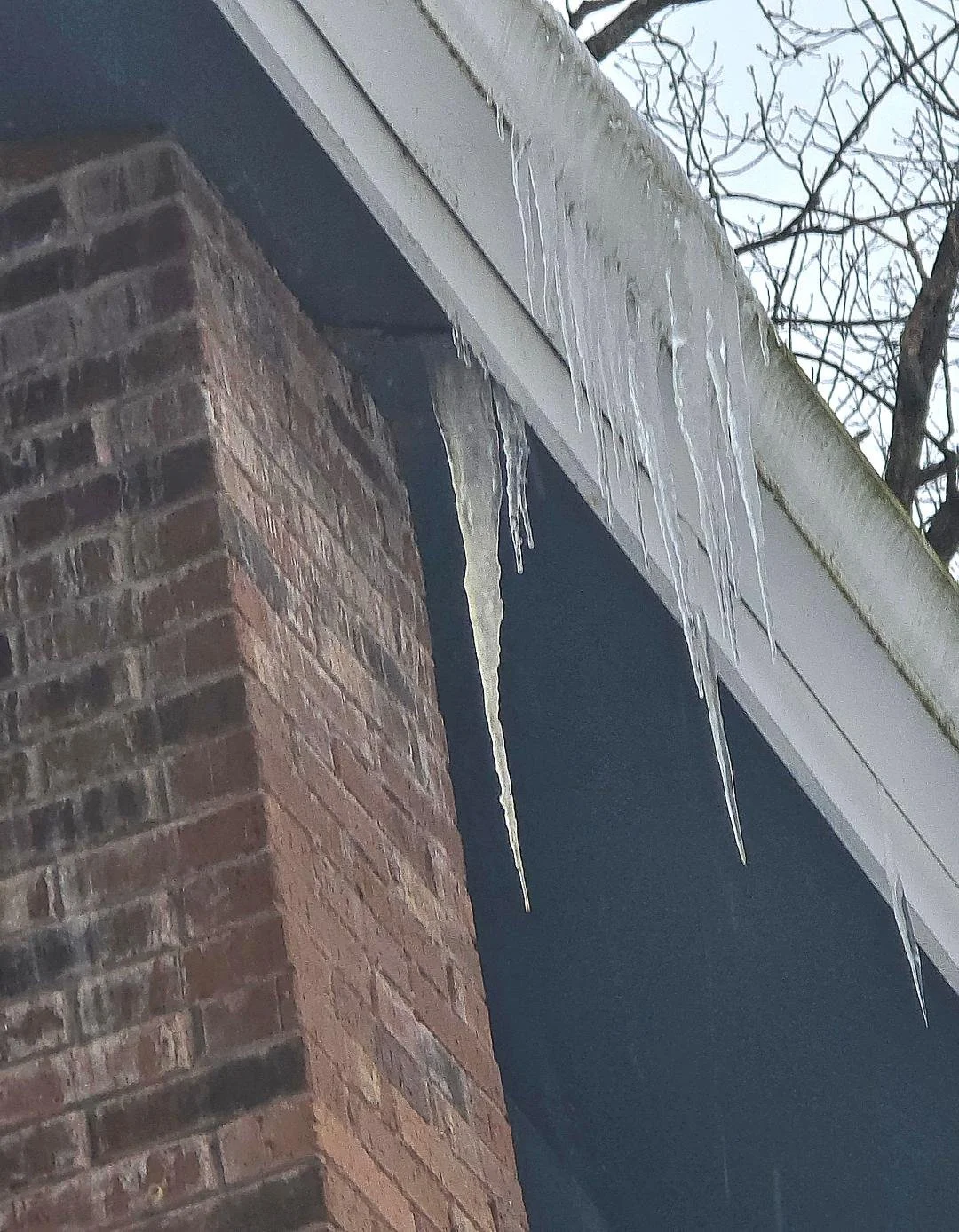
As snow and ice begin melting across Columbus, many Bartholomew County residents are noticing heavy icicles hanging from gutters and rooflines. While icicles can look harmless (or even picturesque), they’re often an early warning sign of ice dams, which can lead to costly residential roof repair and interior water damage if left unchecked.
With fluctuating temperatures and rapid snowmelt, this is a critical time for homeowners to pay attention—especially in older homes common throughout the area.
What Icicles Are Telling You Right Now
Large or persistent icicles along gutters typically mean snow is melting unevenly on your roof. As that water refreezes at the edge, it creates an ice dam that blocks proper drainage.
When water can’t exit the roof system correctly, it can back up beneath shingles and siding—leading to issues that often require home exterior repair or water damage restoration.
Exterior warning signs to watch for:
Thick icicles forming repeatedly in the same spots
Ice buildup along gutter lines
Gutters sagging or pulling away from the fascia
Water dripping behind gutters instead of flowing through downspouts
These conditions often point to problems that go beyond the roof surface and into insulation, ventilation, or gutter performance.
Tipton Home Services works with homeowners throughout Columbus and Bartholomew County to identify the root causes behind ice dams—not just remove the symptoms
Signs Damage May Be Happening Inside Your Home
Ice dam damage doesn’t always announce itself right away. Many homeowners only realize there’s a problem once interior materials are affected.
Interior signs that may indicate hidden damage:
Water stains on ceilings or walls
Bubbling or peeling paint and drywall
Soft or warped drywall near exterior walls
Dripping water during warm daylight hours
Musty odors in upper levels or attic spaces
At this stage, homeowners often need a combination of drywall repair, interior home repair, and moisture mitigation to prevent long-term structural issues.
Worst-Case Scenario: Water Is Already Damaging Walls or Ceilings
If water is actively leaking or visible damage is spreading, this becomes an act-immediately situation.
Steps to take right away:
Take photos and videos – Document interior damage, active leaks, and exterior ice buildup for insurance purposes.
Protect your home – Move furniture and belongings away from affected areas and contain dripping water where possible.
Contact your insurance provider – Ice dam damage is often covered, but documentation is key.
Call a professional restoration company – Proper drying and cleanup are essential to avoid mold and structural damage.
Delaying action can significantly increase the scope and cost of repairs.
Why Ice Dams Happen in the First Place
Ice dams are rarely just a weather issue. They usually indicate underlying problems in the home’s construction or energy efficiency.
Common causes include:
Poor attic insulation allowing heat loss
Inadequate attic ventilation trapping warm air
Air leaks around lighting, ductwork, or attic hatches
Clogged or improperly pitched gutters requiring gutter repair or replacement
Aging roofing materials that make water intrusion more likely
These issues often require evaluation by experienced residential contractors or a local home improvement company to resolve them effectively.
How Tipton Home Services Helps Columbus & Bartholomew County Homeowners
Tipton Home Services works with homeowners throughout Columbus and Bartholomew County to identify the root causes behind ice dams—not just remove the symptoms.
Our approach focuses on long-term solutions, which may include:
Attic insulation and ventilation improvements
Air sealing to reduce heat loss
Coordinated repairs after water damage is properly addressed
As a fully insured contractor, our goal is to help homeowners understand what’s happening in their home and guide them through practical repair options—without pressure or upselling.
If you’re seeing icicles, interior water stains, or signs of ice dam damage during this snowmelt, addressing the issue now can help prevent repeat problems next winter and protect your home’s value.